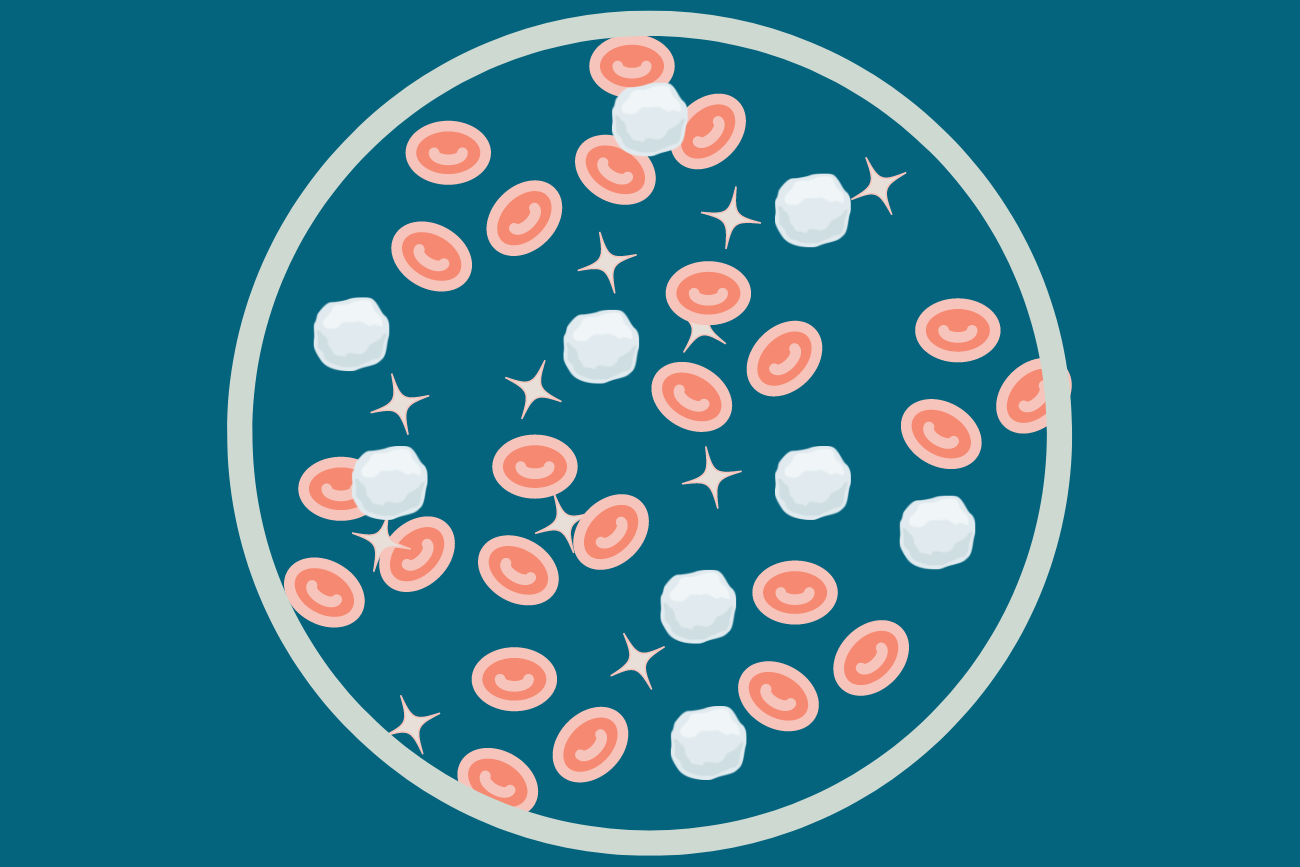
The cells that travel through a person’s bloodstream include red blood cells that carry oxygen, white blood cells that belong to the immune system, and platelets that initiate blood clots. Because of the diversity of blood cell functions, these measurements contribute to both a patient’s thrombophilia assessment and inflammation assessment.
White blood cell count
White blood cells, also known as leukocytes, make up only around 1% of your blood. Although known generally as white blood cells, they are actually a very diverse group of cells. They include monocytes, lymphocytes, neutrophils, and more. As a whole, they are the specialized cells of the immune system.
Some people might learn they have an abnormally low or high white blood cell count. This can be caused by medications, infections, immune system issues or a variety of other health problems. When tested as part of a reproductive immunology assessment, a high white blood cell count can indicate high levels of inflammation and/or that the body is fighting an infection. This finding can help determine appropriate treatments to help improve a patient’s chances of a successful pregnancy.
White blood cell count is also an important measurement to track when undergoing certain immunological treatments.
Platelet count
Platelets, also known as thrombocytes, are the smallest of our blood cells. They circulate in our bloodstream and clot together when they receive the signal that a blood vessel is damaged. In this way, platelets help us stop bleeding when we cut ourselves.
When a person has too many platelets, it is called thrombocytosis. Thrombocytosis can lead to spontaneous blood clots in arms and legs that put a person at increased risk for heart attack and stroke. If this is caused by a health condition such as inflammation, then treating the condition could help reduce platelet count.
When a person has too few platelets, it is called thrombocytopenia. In this case, a person might bruise or bleed easily. Medications can affect platelet count, and it is another important measurement to track when undergoing immunological treatments.
More to read
- Research Metabolic Disorders and Pregnancy: Research Review
- Press Ask an Expert: Everything You Need to Know About Pregmune
- Research Omega Fatty Acids and Pregnancy: Research Review
- Research Folic Acid and Pregnancy: Research Review
- Fertility Treatments Used in Reproductive Immunology
- Press Unexplained Infertility, Immunology, and Recurrent Pregnancy Loss with Dr. Andrea Vidali