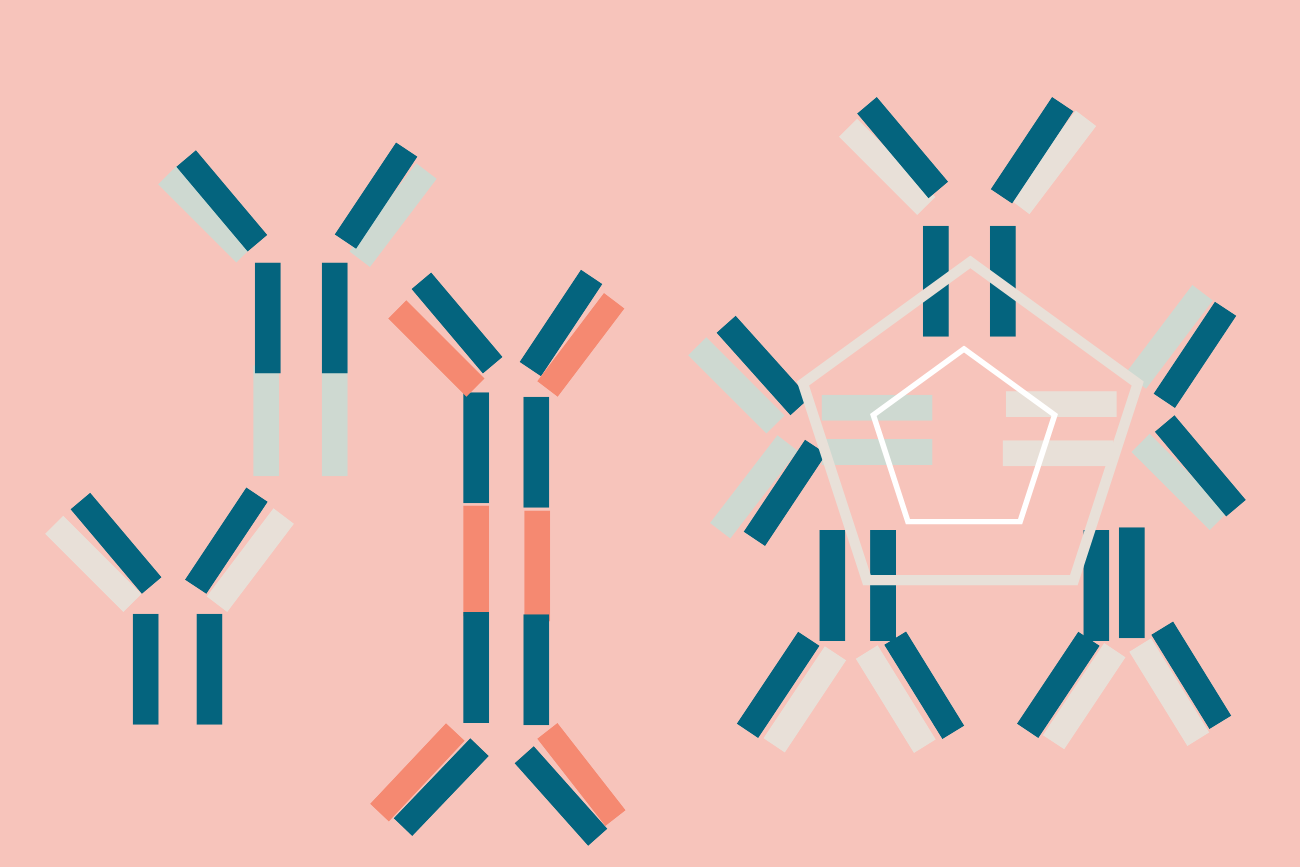
Immunoglobulins, also known as antibodies, are key mediators of the immune system that identify and neutralize pathogens and other targets. Antibody levels can help indicate allergies and other inflammatory reactions.
Whether caused by an autoimmune condition, infection, allergies, or another source, inflammation is associated with reproductive challenges. During a healthy pregnancy, the body must be able to shift to a relatively anti-inflammatory state to maintain the pregnancy.
Immunoglobulin G
Immunoglobulin G, or IgG, is the main type of antibody that is found circulating in the bloodstream. It is a Y-shaped structure that acts by binding bacteria and other foreign substances that enter the body, making it an ideal defense against infections. When people do not have enough IgG, they are more likely to get infections.
Immunoglobulin A
Immunoglobulin A, or IgA, is typically found in our mucous membranes and their fluids (saliva, tears, discharge, etc.). IgA Can be a simple Y shape, or it can take the shape of two Ys joined end to end. IgA deficiencies are linked to asthma, allergies and autoimmune problems.
Immunoglobulin M
Immunoglobulin M, or IgM, is a large antibody formed from five Y shaped structures. It is mainly found in the bloodstream and is the initial antibody produced by the immune system when a pathogen is detected. This makes IgM useful for diagnosing when a person has recently experienced an infection.
Immunoglobulin E
Immunoglobulin E, or IgE, is a Y shaped antibody and the least abundant of all the immunoglobulins. It is thought to have a role in fighting infections by parasitic worms, but with our general low exposure to worms, is now most often linked to allergies. It is capable of triggering anaphylaxis.
Immunoglobulin D
Immunoglobulin D, or IgD, is not typically included in a reproductive immunology assessment. Very little is known about IgD’s biological function.
More to read
- Research Antiphospholipid Antibodies and Pregnancy: Research Review
- Research Chromosomal Abnormalities and Pregnancy: Research Review
- Research The Complement System and Pregnancy: Research Review
- Research Autoimmune Disease Predispositions and Pregnancy
- General New Extended Hours!
- Research Metabolic Disorders and Pregnancy: Research Review