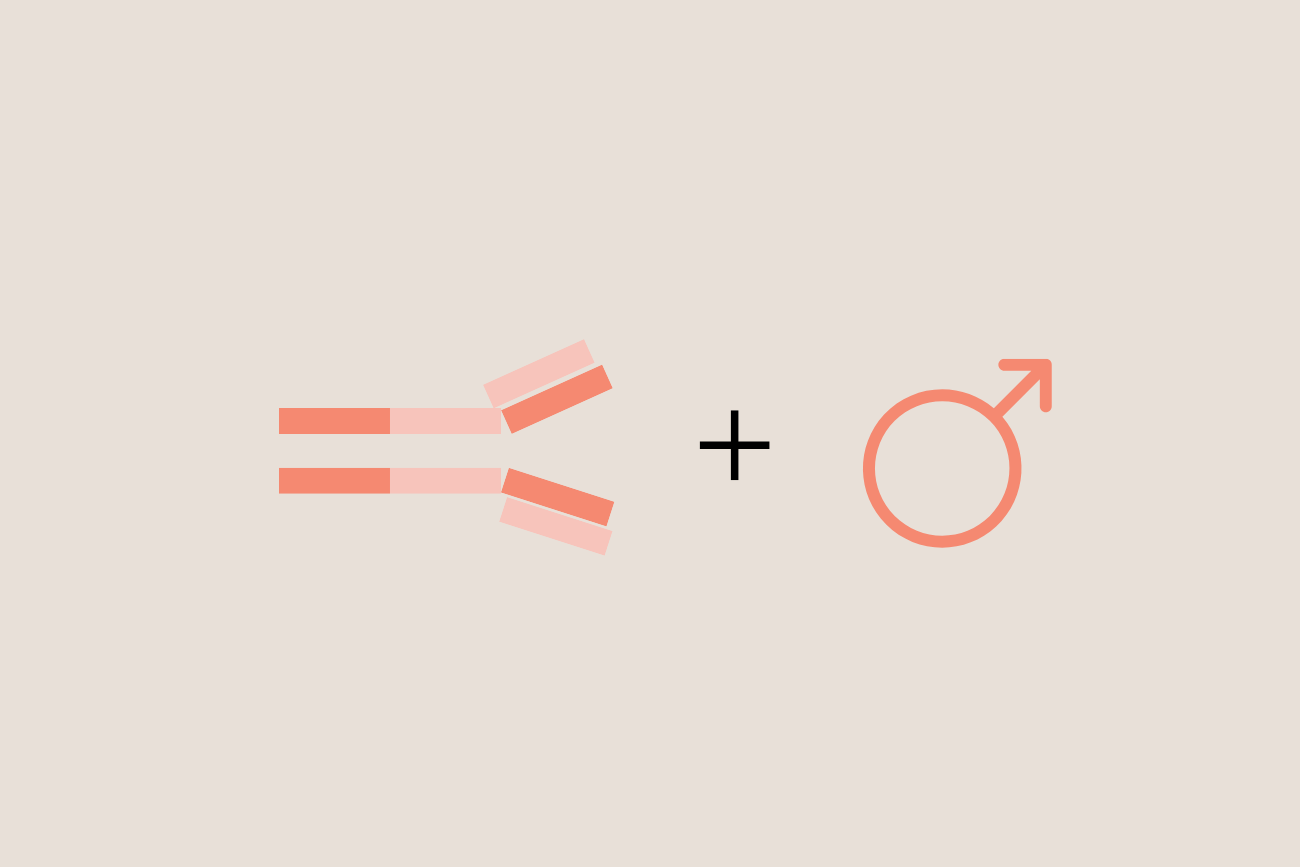
Embryos with a Y chromosome have proteins called HY antigens (male specific minor histocompatibility antigen) on their cells. Occasionally, when a mother gives birth to a boy / baby with a Y chromosome, the mother’s immune system can generate an immune response against these HY antigens and interfere with future pregnancies.
The mother’s human leukocyte antigens (HLAs) are responsible for initiating this immune response, and some HLA alleles increase the likelihood of this happening. IRMA’s HY Immunity assessment determines if the patient carries these higher-risk HY restricting alleles, which might put the patient at higher risk if they’ve previously given birth to a boy. (An allele is an alternate version of a gene at a specific location of the chromosome.)
Physiology
During a first pregnancy with a male fetus, the maternal immune system could be activated by allogenic fetal cells possessing male-specific minor histocompatibility inherited antigens (HYrHLA allele) that are encoded by genes localized on the Y chromosome. In some women, this can lead to an acute immune reaction leading to the production of HY antibodies by B cells. These antibodies can last for several years in the maternal serum1. This may lead to secondary recurrent miscarriage (with male or female embryos) and to giving birth to boys with a low birth weight2-3.
Published clinical data
Although present in 30% of women, anti HY antibodies have been linked to secondary recurrent miscarriage in subsequent pregnancy and other pregnancy complications such as stillbirth, placental abruption or fetal growth retardation, all these events being the results of an inflammatory environment.
A large cohort study including women with unexplained secondary RPL showed that these patients were more prone to miscarriage during their subsequent pregnancy when having a firstborn boy compared to a firstborn girl (46 % versus 24 % respectively)4.
In these patients with a first-born son, the presence of H-Y restricting HLA class II alleles (HLA-DRB1*15, HLA- DQB1*05:01/02 and HLA–DRB3*03:01) has been correlated with lower chance of live birth and a low male/female ratio among the subsequent births (increased loss rate of male embryos)5.
Patients with no copy of HY restricting alleles have a subsequent live birth rate of 73%, which dropped to 58% with 1 allele copy and 49% with two allele copies.
References
- Christiansen OB, Steffensen R, Nielsen HS. Anti-HY responses in pregnancy disorders. Am J Reprod Immunol. 2011 Jul;66 Suppl 1:93-100.
- Kolte AM, Steffensen R, Christiansen OB, Nielsen HS. Maternal HY-restricting HLA class II alleles are associated with poor long-term outcome in recurrent pregnancy loss after a boy. Am J Reprod Immunol. 2016 Nov;76(5):400-405.
- Nielsen HS, Steffensen R, Varming K, Van Halteren AG, Spierings E, Ryder LP, Goulmy E, Christiansen OB. Association of HY-restricting HLA class II alleles with pregnancy outcome in patients with recurrent miscarriage subsequent to a firstborn boy. Hum Mol Genet. 2009 May 1;18(9):1684-91.
- Christiansen OB, Steffensen R, Nielsen HS. The impact of anti-HY responses on outcome in current and subsequent pregnancies of patients with recurrent pregnancy losses. J Reprod Immunol. 2010 May;85(1): 9-14.
- Nielsen HS, Steffensen R, Varming K, Van Halteren AG, Spierings E, Ryder LP, Goulmy E, Christiansen OB. Association of HY-restricting HLA class II alleles with pregnancy outcome in patients with recurrent miscarriage subsequent to a firstborn boy. Hum Mol Genet. 2009 May 1; 18(9): 1684-91.
More to read
- Research Highlight on Vitamin D: A Natural Ally in the Battle Against Endometriosis
- Research Rheumatoid Arthritis and Pregnancy: Research Review
- Research Omega Fatty Acids and Pregnancy: Research Review
- Research Blood Clotting and Pregnancy
- Research HLA-C and KIR Interactions on Pregnancy: Research Review
- Press Unexplained Infertility, Immunology, and Recurrent Pregnancy Loss with Dr. Andrea Vidali