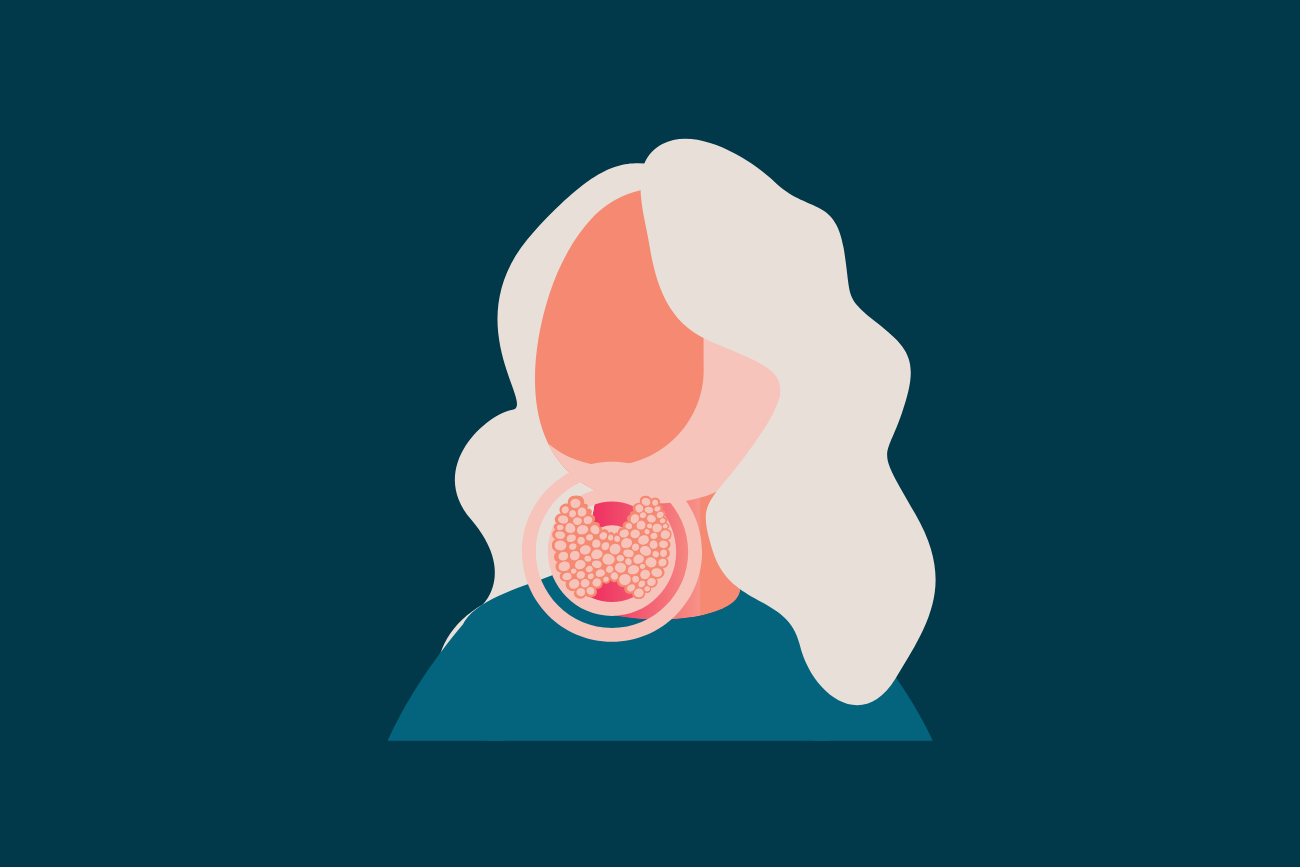
The thyroid is a butterfly-shaped gland located in the neck. It secretes hormones that regulate metabolism, body temperature, the cardiovascular system, and the digestive system. The thyroid’s proper function is crucial when pregnant because the mother’s thyroid hormones affect fetal growth and brain development.
Thyroid disorders can contribute to pregnancy complications, miscarriage, or a person’s ability to get pregnant. Thyroid disorders sometimes arise from autoimmune problems where a person develops antibodies to specific parts of the thyroid. These tests look for thyroid antibodies as well as measure hormone levels related to healthy thyroid functioning.
Physiology
The thyroid gland, located at the base of your neck, is part of your endocrine system. Thyroid dysfunction is the second most common endocrine disorder after diabetes that affects women of reproductive age1, among whom 5–15% test positive for thyroid autoantibodies. It is caused by genetic factors and environmental conditions, both of which are yet to be fully understood.
Hypothyroidism is the most common thyroid alteration observed during pregnancy with the most frequent cause being autoimmune thyroiditis (Hashimoto’s thyroiditis).
Published clinical data
Untreated hypothyroidism can lead to fertility issues with a wide range of adverse outcomes: miscarriage, preterm delivery, gestational hypertension or reduced cognitive function in the offspring2. Thyroid autoimmunity with the production of anti-thyroid antibodies (anti-TPO antibodies) may directly attack the fetoplacental unit thus leading to embryo losses or obstetrical complications.
The miscarriage rate in women with subclinical or clinical hypothyroidism at the time of conception, is significantly increased ranging from 60% up to 71.4%3. On the other hand, when adequately treated, no losses were seen and over 90% of patients delivered at term regardless of the severity of the hypothyroidism.
In women inefficiently treated for hypothyroidism4, fetal loss rate was 29% compared with 6% in patients whose serum TSH values were restored within the reference range after therapy. Even in least severe case of hypothyroidism with no anti-thyroid antibodies and low TSH levels (between 2.5 and 5 mUI/mL), there is an increased risk of miscarriages that almost doubles as compared with control patients when treatment is not administrated5.
Lastly, in a large study including 25 756 women with a singleton pregnancy6, pregnancies in women with subclinical hypothyroidism were three times more likely to be complicated by placental abruption and preterm birth as compared to pregnant women with normal thyroid function. These complications were estimated to increase by 60% for every doubling of the serum TSH concentration.
All together, these data showed that screening, monitoring and adequate treatment to restore optimal thyroid function during pregnancy is crucial to minimize risks and lead to term pregnancies with no obstetrical complication in patients affected with hypothyroidism.
References
- W. Teng, Z. Shan, K. Patil-Sisodia, D.S. Cooper. Hypothyroidism in pregnancy. Lancet Diabetes Endocrinol, 1 (2013), pp. 228-237.
- Milanesi A & Brent GA. Management of hypothyroidism in pregnancy. Current Opinion in Endocrinology, Diabetes, and Obesity 2011 18 304–309.
- Abalovich M, Gutierrez S, Alcaraz G, Maccallini G, Garcia A & Levalle O. Overt and subclinical hypothyroidism complicating pregnancy. Thyroid 2002 12 63–68. (doi:10.1089/1050725027 53451986) 23 Hallengren B, Lantz M, Andreasson B & Grennert L. Pregnant women on thyroxine substitution are often dysregulated in early pregnancy. Thyroid 2009 19 391–394.
- Hallengren B, Lantz M, Andreasson B & Grennert L. Pregnant women on thyroxine substitution are often dysregulated in early pregnancy. Thyroid 2009 19 391–394.
- Negro R, Schwartz A, Gismondi R, Tinelli A, Mangieri T & Stagnaro-Green A. Increased pregnancy loss rate in thyroid antibody negative women with TSH levels between 2.5 and 5.0 in the first trimester of pregnancy. Journal of Clinical Endocrinology and Metabolism 2010 95 E44–E48.
- Casey BM, Dashe JS, Wells CE, McIntire DD, Byrd W, Leveno KJ & Cunningham FG. Subclinical hypothyroidism and pregnancy outcomes. Obstetrics and Gynecology 2005 105 239–245.
- Benhadi N, Wiersinga WM, Reitsma JB, Vrijkotte TG & Bonsel GJ. Higher maternal TSH levels in pregnancy are associated with increased risk for miscarriage, fetal or neonatal death. European Journal of Endocrinology 2009 160 985–991.
More to read
- Research HY Immunity and Pregnancy: Research Review
- Fertility When Infertility Leads to Anxiety
- Research Discovering the Wonders of Fish Oil: A Guide to Your Health and Fertility
- Research Vitamin D and Pregnancy: Research Review
- Research Natural Killer Cells and Pregnancy: Research Review
- Press The Basics of Reproductive Immunology with Dr. Andrea Vidali