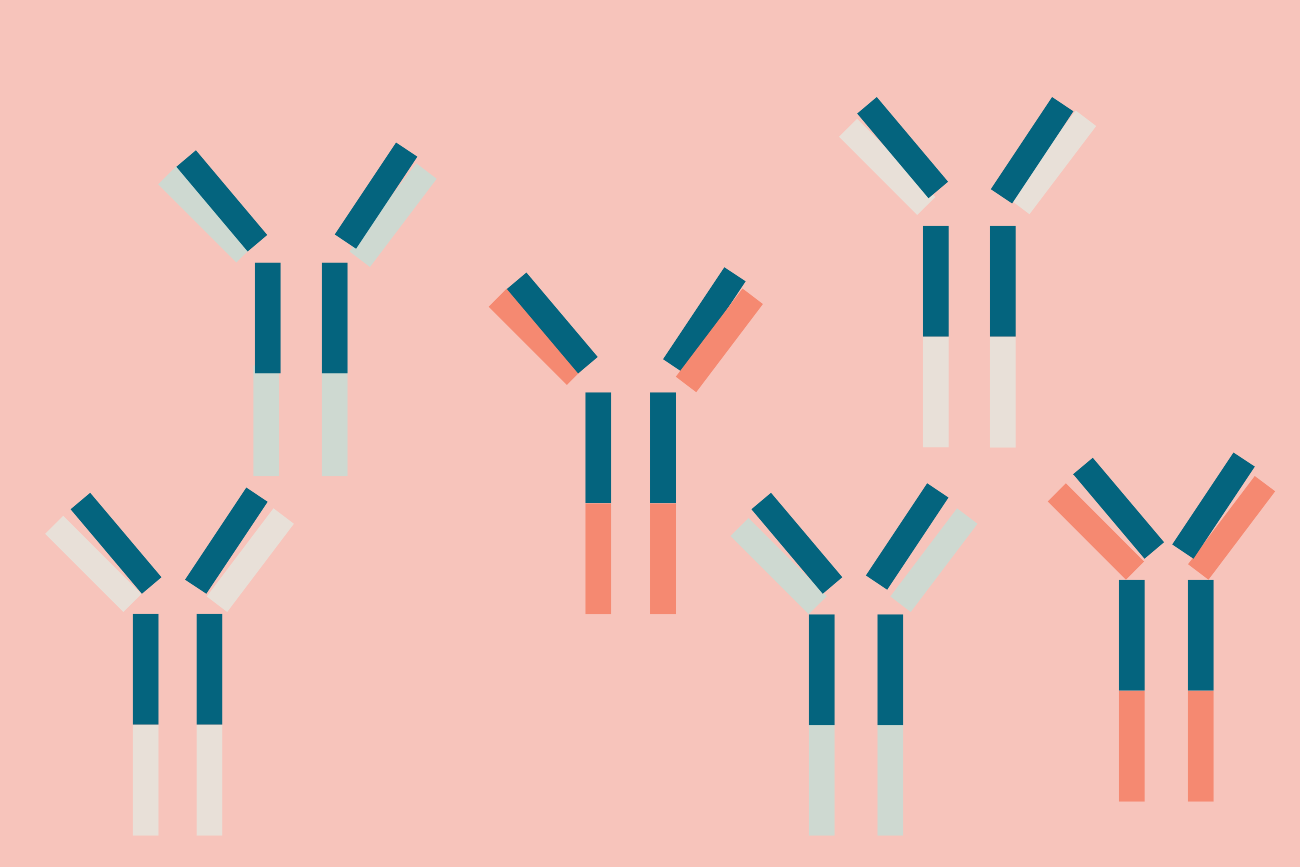
HLA antibodies are assessed as part of the parental histocompatibility section of the IRMA report. Parental histocompatibility examines the impact of human leukocyte antigens (HLAs) on pregnancy.
HLAs are diverse proteins displayed on human cells like a barcode – unique for everyone. The immune system uses HLAs to differentiate “self” from “non-self.”
Sometimes, a person’s immune system can develop antibodies to HLAs. These antibodies can target HLAs from previous full-term pregnancies or blood transfusions, or they can specifically target a partner’s HLAs – which the embryo will inherit. HLA antibodies are common and aren’t necessarily a problem, but partner-specific HLA-C antibodies (a subtype of Class I antibodies) can pose a considerable risk and are associated with early miscarriages and secondary infertility. An HLA antibody assessment measures how much and what type of HLA antibodies a patient carries, if any.
Physiology
Pregnancy is marked by profound changes of the maternal immune system that allow the semi-allogeneic fetus to implant and grow within the uterus.
Among immune cells, B lymphocytes (B cells) are key players in the maternal immune adaptation towards fetal implantation.
Some B cell subsets are capable of producing antibodies that target components of the embryo/fetus encoded by the paternal genetics – most notably paternally derived HLA molecules.
Anti-HLA antibodies are present in one third of healthy successful pregnancies1.
Nevertheless, the presence of partner-specific anti-HLA antibodies (particularly those that fix complement) can be harmful to pregnancy maintenance and can induce miscarriage, or later complications such as preeclampsia, intrauterine growth restriction, or stillbirth.
Published clinical data
In patient with a history of secondary recurrent pregnancy losses (SRPL: patient experiencing several losses after the birth of a first child), the frequency of anti HLA antibodies was found to be higher in those who had obstetrical complications compared to those with uncomplicated prior birth2. Further, when detected in early pregnancy in SRPL patients, the chances for a live birth are decreased.
References
- L. Regan, P.R. Braude, D.P. Hill. A prospective study of the incidence, time of appearance and significance of anti-paternal lymphocytotoxic antibodies in human pregnancy. Human Reproduction, Volume 6, Issue 2, February 1991, Pages 294–298.
- Henriette Svarre Nielsen 1, Marian D Witvliet, Rudi Steffensen, Geert W Haasnoot, Els Goulmy, Ole Bjarne Christiansen, Frans Claas. The presence of HLA-antibodies in recurrent miscarriage patients is associated with a reduced chance of a live birth. Reprod Immunology.2010 Dec;87(1-2):67-73. doi: 10.1016/j.jri.2010.05.006
More to read
- Research Homocysteine and Pregnancy: Research Review
- Press The Basics of Reproductive Immunology with Dr. Andrea Vidali
- Research Cell Blood Count and Pregnancy
- Research Chromosomal Abnormalities and Pregnancy: Research Review
- Research Prothrombin Factor II and Pregnancy: Research Review
- Press Dr. Andrea Vidali on How Endometriosis Can Impact Embryos and Fertility